Civil Services Prep

Weekly digest

UPSC current affairs, 26 Oct-1 Nov, 2026

65 entries, published 26 October 2026.

Monday, 26 Oct

Polity

1

Removal of State Public Service Commission Chairpersons

Polity

Why in news

  • A recommendation seeking the removal of the Kerala Public Service Commission chairperson over alleged recruitment irregularities has raised questions about the constitutional procedure.
  • An investigation or recommendation does not establish misconduct or itself remove a constitutional office-holder.

Constitutional safeguards

Provision What it provides
Article 315 It provides for Public Service Commissions for the Union and the States.
Article 316 The Governor appoints a State Commission’s chairperson and members. They hold office for six years or until age 62, whichever is earlier.
Article 317 The President has the power to remove a Commission’s chairperson or member, including those of a State Commission.
Article 322 A State Commission’s expenses are charged on the State’s Consolidated Fund, supporting its independence.

How removal works

  • For alleged misbehaviour, the President refers the matter to the Supreme Court. Removal on this ground requires an inquiry and a report that the person ought to be removed.
  • After the reference to the Supreme Court, the Governor may suspend the State Commission office-holder until the President passes the final order.
  • The President can remove a member without this inquiry if the person is adjudged insolvent, engages in paid employment outside the duties of office during the term, or is considered unfit to continue because of infirmity of mind or body.
  • The Governor’s power to appoint does not include an independent power to remove the chairperson.

Significance

  • These safeguards balance accountability with protection from political pressure in public recruitment.
  • Removing an individual office-holder is different from abolishing a constitutional Public Service Commission.

Polity

2

Right to Peaceful Assembly and Restrictions on Protests

Polity

Why in news

  • Restrictions on demonstrations and prohibitory orders around protest spaces have renewed debate about the right to peaceful assembly.

Constitutional position

  • Article 19(1)(a) protects citizens’ freedom of speech and expression, while Article 19(1)(b) protects their right to assemble peacefully and without arms.
  • Under Article 19(3), reasonable restrictions on assembly can be imposed in the interests of public order and the sovereignty and integrity of India.
  • Authorities must also protect other people’s access to roads, workplaces and essential services.

Section 163 of the BNSS

  • Section 163 of the Bharatiya Nagarik Suraksha Sanhita (BNSS), 2023, replaced Section 144 of the Code of Criminal Procedure.
  • It allows an empowered Executive Magistrate to issue preventive orders where immediate action is necessary to address specified dangers, disturbances or threats to public order.
  • An order must state the material facts in writing. In an emergency, it may be issued ex parte, meaning without first hearing the affected person.
  • An order normally lasts no more than two months. The State government may extend it for up to six additional months on the statutory grounds.

Regulation and proportionality

  • In Himat Lal K. Shah v. Commissioner of Police, Ahmedabad (1973), the Supreme Court recognised that public assemblies can be regulated, but arbitrary exclusion from public spaces is incompatible with the constitutional right.
  • Time, place and manner restrictions should respond to a demonstrable risk and remain proportionate to it.
  • Designating an inaccessible or ineffective protest site can undermine the practical exercise of the right even if assembly is formally permitted.

Economy

3

Platform-Based Domestic Work and Social Security

Economy

Why in news

  • App-based domestic services are changing how household work is booked, priced and supervised, raising questions about wages, safety, deductions and social protection.

How the arrangement works

  • Customers book services such as cleaning or cooking assistance through an app. The platform connects them with workers and may influence prices, job allocation, ratings and cancellation rules.
  • A gig worker earns through work arrangements outside a traditional employer–employee relationship. Platform work uses an online platform to connect workers with customers.

What workers’ experiences show

  • Individual accounts described working days of around 12 hours and monthly earnings of approximately ₹25,000, with earnings affected by ratings and job allocation.
  • Reported cancellation conditions included a ₹1,000 deduction and a limit of two cancellations in 15 days. These accounts should not be treated as universal rules across all platforms.
  • A customer price of ₹99 an hour is not necessarily the wage received by the worker.
  • Calling workers “partners” or independent contractors does not by itself resolve who bears responsibility for working conditions, injuries or unfair deductions.
  • Ratings can affect future earnings, including when workers dispute excessive demands or unsafe conditions.

Social-security framework

  • The Code on Social Security, 2020, recognises gig and platform workers and provides for social-security schemes for them.
  • e-Shram is a national database of unorganised workers that can facilitate access to eligible benefits. Registration does not automatically confer every benefit.

Policy priorities

  • Workers need clear payment and deduction rules, accessible appeals, safety arrangements and clarity about the responsibilities of platforms and customers.
  • Flexible booking should be accompanied by meaningful protection against arbitrary loss of earnings and unsafe work.

Science & Technology

4

Molecular Machines and Controlled Molecular Motion

Science & Technology

Why in news

  • Research reported on 22 October 2026 demonstrated controlled motion in a corkscrew-shaped molecule positioned between two electrical contacts. Reversing the voltage reversed the preferred direction of motion.

What is a molecular machine?

  • A molecular machine converts supplied energy into controlled movement at the scale of molecules.
  • Natural examples include kinesin, which transports cargo along structures called microtubules inside cells, and myosin, which helps muscles contract.
  • Artificial molecular machines can rotate, slide or change shape in response to light, electricity or chemical energy.

Important milestones

Development What it demonstrated
Catenanes, 1983 Mechanically interlocked molecular rings could be linked like the parts of a chain.
Rotaxanes, 1991 A molecular ring could be threaded around an axle, allowing controlled relative movement.
Light-driven molecular motors Light energy could drive controlled molecular rotation.
  • Jean-Pierre Sauvage, J. Fraser Stoddart and Bernard L. Feringa received the 2016 Nobel Prize in Chemistry for the design and synthesis of molecular machines.
Helical molecule suspended between two gold electrode tips.
Illustration of a molecule between gold electrode contacts.

What the new research shows

  • Researchers placed a spiral-shaped molecule called helicene between two electrodes. Electrodes are conducting contacts that let electricity flow into and out of the molecule.
  • When electric current passed through the molecule, it created a twisting force called torque. This force made the molecule rotate or change its shape.
  • The molecule did not move much at low voltage. But once the voltage became high enough, the molecule could rotate into shapes that allowed electricity to pass through more easily.
  • This created a feedback effect: the current helped the molecule move, and the molecule’s new position helped more current flow.
  • Researchers also stretched and compressed the molecule. These changes affected how much voltage was needed before the molecule began this motion.
  • This shows that a single molecule can act like a tiny electrical and mechanical device, with its movement controlled by electricity.

Significance

  • The experiment connects mechanical movement with electrical behaviour at the molecular scale.
  • It demonstrates how molecular machines can be controlled and monitored through changes in electrical current.
  • The findings contribute to the development of nanoscale devices, molecular electronics, and targeted drug-delivery systems.
  • The experiment provides evidence that individual molecules can perform coordinated mechanical functions.

Limitations

  • Random thermal motion makes reliable control difficult. Coordinating many molecular machines and operating them under practical conditions remain major challenges.
  • Molecular devices may be sensitive to changes in temperature, solvent conditions, electrical noise, and surrounding chemical environments.
  • Scaling up the process while maintaining consistent performance and precise control is still difficult.
  • The long-term stability, durability, and energy efficiency of such molecular machines require further investigation.
  • This is an experimental prototype rather than a ready-to-use miniature robot.
  • Further research is needed to improve control, increase operating speed, and integrate molecular machines into practical technologies.

Geography

5

Northeast Monsoon, El Niño and Forecasting Uncertainty

Geography

Why in news

  • A deficient southwest monsoon and a strengthening El Niño have increased attention to the northeast monsoon and the uncertainty surrounding seasonal forecasts.
  • June–September rainfall was reported at 759.4 millimetres, against a normal of 868.6 millimetres, a 12.6% deficit and the lowest total in 11 years.

How the northeast monsoon works

  • The October–December northeast monsoon is particularly important for Tamil Nadu, Puducherry and parts of Andhra Pradesh, Karnataka and Kerala.
  • As the continent cools, seasonal winds increasingly blow from the northeast. Winds crossing the Bay of Bengal collect moisture and bring rain to southeastern India.
  • Depressions and cyclones can concentrate a large amount of rain into a few days.

Understanding El Niño

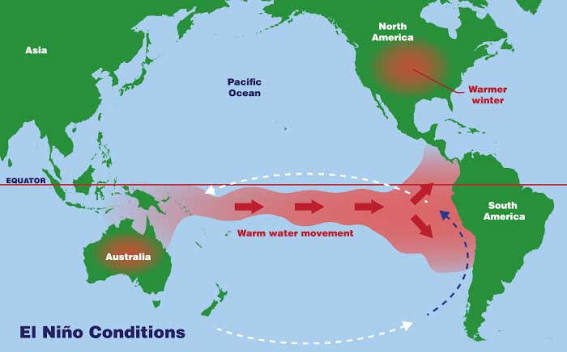
  • El Niño involves unusually warm surface waters in the central and eastern equatorial Pacific, together with changes in atmospheric circulation.
  • It is often associated with a weaker Indian southwest monsoon, but its relationship with the northeast monsoon is different. Some El Niño years favour northeast monsoon rainfall.
  • This is not an automatic rule. Tamil Nadu received above-normal rainfall in 1997 and 2009, while 1982 and 2002 were poor northeast monsoon years despite El Niño conditions.
  • Conditions in other ocean regions and the paths of rain-bearing systems also affect the outcome.
Pacific map illustrating eastward warm-water movement during El Niño.
El Niño schematic showing warm surface water shifting eastward in the equatorial Pacific. Regional weather effects vary between events.

Reading a forecast correctly

  • The long-period average (LPA) is a benchmark calculated from rainfall over many years.
  • A forecast of a normal seasonal total does not guarantee normal rainfall in every district or an even distribution through the season. Floods and long dry intervals can occur within the same season.

Preparedness

  • Clearing storm drains, protecting wetlands, preparing shelters and following local warnings can reduce losses.
  • Reservoir management must account for both water shortages and sudden heavy inflows.

Tuesday, 27 Oct

Polity

1

Data-protection law and freedom of the press

Polity

Why in news

  • The Digital News Publishers’ Association has challenged provisions of the Digital Personal Data Protection Act, 2023, and its 2025 Rules, arguing that they threaten journalistic freedom and access to information.

What does the law regulate?

  • The Act governs the processing of digital personal data, meaning information that can identify an individual.
  • A data principal is the individual whose information is processed. A data fiduciary is the organisation or person deciding why and how that information is processed.
  • Processing includes collecting, storing, using, sharing and deleting personal information.

Important provisions of the Act

  • Coverage: It covers digital personal data, including paper records later digitised, and overseas processing linked to offering goods or services in India.
  • Consent: Permission must be informed and specific, and withdrawing it must be as easy as giving it. Specified legitimate uses, such as medical emergencies, do not require consent.
  • Individual rights: People can seek information about processing, correction, erasure and grievance resolution, subject to legal conditions.
  • Organisations’ duties: They must protect data and delete it when its purpose ends or consent is withdrawn, unless retention is legally required.
  • Children: For those below 18, verifiable parental consent is generally required. Tracking and targeted advertising directed at children are restricted, with specified exemptions.
  • Enforcement: The Data Protection Board can investigate breaches and impose penalties. Failure to take reasonable security safeguards can attract up to ₹250 crore.
  • Exceptions: Personal or domestic use is excluded. Certain publicly available data is excluded, and specified state activities can receive exemptions.

Important provisions of the 2025 Rules

  • Clear notices: Organisations must explain what data they collect, why they need it and how people can withdraw consent or complain.
  • Security: Safeguards include encryption or masking, access controls, monitoring, backups and security conditions in contracts with service providers.
  • Breach reporting: Affected people and the Board must be informed without delay. A detailed report must reach the Board within 72 hours, unless an extension is granted.
  • Parental consent: Organisations must take reasonable steps to verify that the person giving parental consent is an identifiable adult.
  • Higher-risk organisations: Those designated as Significant Data Fiduciaries must undertake annual data-protection impact assessments and audits.
  • Consent Managers: Registered services can help individuals give, review and withdraw consent across organisations.
  • Phased implementation: Board-related provisions began first; Consent Manager provisions follow after one year, while most operational duties begin after 18 months from publication in November 2025. These duties should not all be described as already enforceable in October 2026.

What are the concerns?

  • Journalistic exemption: The petition argues that the absence of a specific exemption for journalism could make investigations dependent on notice and consent from the people being investigated.
  • Protection of sources: Section 36, read with Rule 23 and the Seventh Schedule, provides for government requests for information. The petitioners fear that these powers could expose confidential sources.
  • Right to Information: Section 44(3) changes Section 8(1)(j) of the Right to Information Act, 2005, broadening the wording of the personal-information exemption.
  • However, Section 8(2) of the RTI Act retains a public-interest override: information may be disclosed when the public interest outweighs the harm to protected interests.

Constitutional significance

  • Article 19(1)(a) protects freedom of speech and expression, including press freedom.
  • Article 21 protects privacy, recognised as a fundamental right in the K.S. Puttaswamy judgment, 2017.
  • Article 14 requires equality before the law and guards against arbitrary state action.
  • The central question is how to protect personal privacy while allowing public-interest reporting, accountability and access to information.
  • These are arguments raised in a constitutional challenge; they should not be treated as findings that the Court has already accepted.

Science & Technology

2

Kashmir’s traditional rice and climate-resilient agriculture

Science & Technology

Why in news

  • A genetic study found that Kashmir’s traditional rice retains adaptations to cold conditions and shares genetic links with rice from Korea and Northeast China.

Key findings

  • Researchers compared 142 Kashmir rice samples with 3,010 samples in a global rice collection and examined 21 agricultural traits.
  • Landraces are traditional crop populations maintained by farmers and adapted to local conditions. Germplasm means genetic material, such as seeds, used in research and breeding.
  • Traditional varieties retain variants of HAN1 and CTB4a, genes associated with cold tolerance. Some modern varieties have partly lost these adaptations during breeding for yield and grain quality.
  • These landraces also show mixing with tropical rice, rather than an exclusively East Asian ancestry.

Significance and limitations

  • Conserving these varieties can provide useful genes for climate-resilient crop breeding.
  • Genetic similarity does not prove the exact historical migration route. Predicted traits also require field testing before their benefits are confirmed.

Science & Technology

3

Double-fortified salt for tackling anaemia

Science & Technology

Why in news

  • Renewed attention to anaemia prevention has highlighted double-fortified salt as a way to deliver iron through existing food-distribution systems.

What is double-fortified salt?

  • Food fortification means adding essential vitamins or minerals to a commonly consumed food.
  • Ordinary iodised salt contains added iodine. Double-fortified salt, or DFS, contains both iodine and iron.
  • Iodine supports thyroid function, while iron is needed to produce haemoglobin, the protein in red blood cells that carries oxygen.

Understanding anaemia

  • Anaemia occurs when haemoglobin levels are below the appropriate threshold, reducing the blood’s oxygen-carrying capacity.
  • Iron deficiency is an important cause, but anaemia can also result from infections, other nutrient deficiencies and inherited blood disorders.
  • Therefore, supplying iron alone cannot address every case.

Evidence and scale

  • Around 95% of Indian households already consume iodised salt, providing an established distribution platform.
  • DFS reaches an estimated 76 million people across four States through government safety-net programmes.
  • Research reviews indicate a reduction in anaemia prevalence of approximately 21% compared with iodised salt. This is a relative reduction, not a fall of 21 percentage points.
  • Its estimated annual cost is ₹14–₹20 per person, although actual programme costs depend on procurement and implementation.

Implementation priorities

  • The Food Safety and Standards Authority of India specifies standards for fortified foods.
  • School meals, anganwadi nutrition programmes and the Public Distribution System can help reach vulnerable households.
  • Quality control must ensure appropriate nutrient levels, stability and consumer acceptance.
  • DFS should complement a varied diet, supplementation and screening for conditions such as thalassaemia and sickle cell disease.
  • Fortification should improve the nutritional value of salt already consumed; it should not encourage higher salt intake.

Science & Technology

4

Kudankulam and cybersecurity beyond critical facilities

Science & Technology

Why in news

  • A reported breach involving contractor-held documents related to the Kudankulam nuclear power project has raised questions about protecting sensitive information outside a facility’s own networks.

What happened?

  • Attackers claimed to possess nearly 19,000 files, totalling approximately 14.3 GB, covering records from 2016–2025.
  • The material reportedly included engineering drawings, supplier details, inspection records and other project documents.
  • Reliance Infrastructure, the engineering, procurement and construction contractor for Units 3 and 4, confirmed a breach involving data stored with a third-party data-centre provider.
  • The Nuclear Power Corporation of India Limited stated that the documents concerned non-nuclear infrastructure and were unrelated to reactor systems.

Why is this distinction important?

  • A leak of project documents is different from an intrusion into reactor-control systems. The reported incident does not establish that reactor controls were compromised.
  • However, sensitive drawings and supplier information can help attackers identify vulnerabilities, impersonate trusted organisations or plan further attacks.
  • Protecting the main facility is therefore insufficient if contractors, subcontractors and external storage providers hold valuable information.

Relevant institutions and laws

  • The National Critical Information Infrastructure Protection Centre, designated under Section 70A of the Information Technology Act, 2000, coordinates protection of critical information infrastructure.
  • The Indian Computer Emergency Response Team, recognised under Section 70B, performs national cybersecurity incident-response functions.
  • Critical information infrastructure includes computer resources whose disruption could seriously affect national security, the economy, public health or safety.
  • Personal-data protection alone does not cover every risk: an engineering drawing may be sensitive without containing personal information.

What needs to improve?

  • Security requirements should follow sensitive data throughout the contractor chain.
  • Contracts should specify access controls, storage safeguards, breach reporting, audits and responsibility for failures.
  • Organisations should limit unnecessary copies and retain sensitive records only as long as required.

Environment

5

E85/E100 rules and flex-fuel vehicles

Environment

Why in news

  • Amendments to the Central Motor Vehicles Rules, 1989, update emission-certification provisions to expressly include E100 alongside E85, supporting vehicles designed for high-ethanol fuels.

Understanding the fuels

  • The letter E denotes ethanol, while the number indicates its proportion in the fuel.
  • E85 contains up to 85% ethanol by volume.
  • E100 consists predominantly of ethanol, subject to the applicable fuel specifications.

What is a flex-fuel vehicle?

  • A flex-fuel vehicle is specially designed to operate on different approved petrol–ethanol blends using a single fuel tank.
  • Its fuel-system materials must tolerate those blends, while engine controls adjust operation to the fuel composition.
  • The usable fuel range depends on the vehicle’s design and certification.

What do the amendments mean?

  • Vehicles certified for E85 or E100 must meet the emission and safety requirements applicable to their category.
  • Compatibility with E10 or E20 does not establish compatibility with E85 or E100.
  • Existing vehicle owners are not required to switch to E85 or modify their vehicles.

Benefits and concerns

  • Domestically produced ethanol can reduce dependence on imported crude oil and create demand for agricultural feedstocks.
  • Its overall climate benefit depends on cultivation, fertiliser use, processing energy and transportation—not simply on the ethanol percentage.
  • Water use, competition for land and food crops, fuel availability and vehicle compatibility remain important considerations.
  • Ethanol contains less energy per litre than petrol, so fuel economy must also be considered when comparing operating costs.

Wednesday, 28 Oct

Science & Technology

1

Genetics, personality and polygenic scores

Science & Technology

Why in news?

  • A study involving up to 1.14 million people across 46 study cohorts identified around 1,250 genetic variants associated with personality traits.

What did the study examine?

  • The study examined the Big Five personality traits: openness, conscientiousness, extraversion, agreeableness and neuroticism.
  • Openness means curiosity and willingness to explore new ideas. Conscientiousness refers to organisation and responsibility. Extraversion concerns sociability, while agreeableness involves cooperation and compassion. Neuroticism describes a tendency towards anxiety and emotional distress.

How do scientists study these links?

  • A genetic variant is a small difference in DNA between individuals. It is not necessarily a separate gene.
  • A genome-wide association study (GWAS) compares genetic variants across many people to identify variants statistically associated with a measured trait.
  • A polygenic score combines the estimated effects of numerous genetic variants. Each variant usually contributes only a tiny effect; there is no single “personality gene”.

What do the findings mean?

  • Some genetic patterns associated with personality also overlap with patterns linked to mental health, substance use and physical health.
  • Such overlap shows an association, but does not prove that a personality trait directly causes a disease.
  • Genes do not determine personality completely. Family environment, education, experiences and social conditions also matter.
  • These scores are useful for population research but remain limited tools for assessing an individual. Their reliability can also decline across ancestry groups because genetic databases disproportionately represent people of European ancestry.

Geography

2

Lake-ending glaciers and accelerated ice loss

Geography

Why in news?

  • Research found that glaciers ending in water or ice shelves contribute disproportionately to global glacier ice loss. Lake-ending glaciers showed particularly high losses relative to their size.

Understanding the terms

  • A glacier is a large mass of land ice that moves slowly under its own weight. Its lower end is called the terminus.
  • A lake-ending glacier has its terminus in a lake. Such lakes often develop in front of retreating glaciers and are called proglacial lakes.
  • Calving occurs when chunks of ice break away from a glacier’s edge.

Key findings

  • Glaciers ending in lakes, oceans or ice shelves together constitute about 3.2% of the world’s glaciers by number.
  • This combined group lost approximately 134 billion tonnes of ice annually during 2000–2019, accounting for over half of global glacier ice loss.
  • Relative to their size, lake-ending glaciers lost 57% more ice than land-ending glaciers.
  • After accounting for factors such as climate, size and elevation, lake-ending glaciers flowed around 10% faster than land-ending glaciers.

Why can a lake accelerate retreat?

  • Lake water can melt submerged ice, while calving removes ice from the terminus. These processes can reinforce glacier retreat.

Why does this matter for India?

  • Better glacier models are important for Himalayan water supplies and disaster planning.
  • Expanding glacial lakes require monitoring for glacial lake outburst floods, which occur when stored lake water is suddenly released. The presence of a lake alone does not mean an outburst is imminent.

Environment

3

Project Cheetah and protection beyond national parks

Environment

Why in news?

  • KNG22, a 19-month-old male cheetah born to Nirva, died during treatment after being found with gunshot injuries outside Kuno National Park in Madhya Pradesh.
  • Five firearm pellets were recovered, and a four-member special task force was constituted to investigate.

What is Project Cheetah?

  • Project Cheetah seeks to establish a viable cheetah population in India through reintroduction, habitat management, prey protection and scientific monitoring.
  • The reintroduction programme began in September 2022. Kuno National Park was its initial release site.

What does this incident reveal?

  • Free-ranging cheetahs can move beyond protected-area boundaries. Their safety therefore depends on conditions across the wider landscape.
  • Radio collars help track movement, but cannot physically prevent shooting, poisoning, road accidents or conflict.
  • Investigators are examining different possibilities, including poaching and mistaken identification. The motive has not yet been established.

Population update

  • Following the death, the reported population stood at 58 cheetahs: 52 at Kuno, four at Gandhi Sagar Wildlife Sanctuary and two at Veerangana Durgavati Tiger Reserve.

What measures are needed?

  • Conservation must protect movement routes and suitable habitats outside national parks.
  • Local communities need reliable channels to report sightings and obtain help when wildlife approaches settlements or livestock.
  • Rapid veterinary response, coordination between police and forest staff, and effective investigation of wildlife offences are essential.
  • Long-term success requires breeding, cub survival, adequate prey and public acceptance alongside protection against deliberate harm.

Science & Technology

4

Ebola outbreak and Bundibugyo virus

Science & Technology

Why in news?

  • The Democratic Republic of the Congo reported 10,060 cases and 4,887 deaths in an Ebola outbreak that began in May 2026.
  • The outbreak involves Bundibugyo virus, one of several viruses capable of causing Ebola disease.

What is Ebola disease?

  • Ebola is a severe viral disease that can pass from infected animals to humans and then spread between people.
  • Human transmission occurs through direct contact with infected blood or other body fluids, contaminated objects, or the bodies of people who have died from the disease.
  • The incubation period, meaning the interval between infection and symptoms, is generally 2–21 days. People are generally not infectious before symptoms begin.
  • Symptoms can include fever, weakness, vomiting and diarrhoea. Bleeding can occur, but is not present in every patient.

Why does the virus species matter?

  • Vaccines and medicines developed against one Ebola-causing virus cannot automatically be assumed to work against another.
  • Ervebo is licensed against disease caused by Zaire ebolavirus. Its effectiveness against Bundibugyo virus is being investigated.
  • There is no licensed vaccine or specific treatment established for Bundibugyo virus disease. Candidate interventions are being evaluated through research.

How can outbreaks be controlled?

  • Early diagnosis, isolation, contact tracing, protective equipment, safe burials and community cooperation help interrupt transmission.
  • Supportive care—including fluids and treatment of complications—remains important even when a proven species-specific medicine is unavailable.

Environment

5

Amazon conservation and the Tropical Forest Forever Facility

Environment

Why in news?

  • The Netherlands announced a conditional intention to contribute up to $500 million over a decade to the Tropical Forest Forever Facility (TFFF).
  • Announced commitments reached approximately $7.8 billion, against a $10 billion target by the end of 2026.

What is the TFFF?

  • The Tropical Forest Forever Facility (TFFF) rewards eligible tropical-forest countries for maintaining standing forests.
  • It was designed by Brazil, working with Colombia, the Democratic Republic of the Congo, France, Germany, Ghana, Indonesia, Malaysia, Norway, the United Arab Emirates and the United Kingdom.
  • It was officially launched at the COP30 Leaders’ Summit in Belém, Brazil, in November 2025.
  • Its wider financing ambition is $125 billion, combining public backing with investment capital.
  • Investment returns are intended to support payments based on measured forest performance.
  • At least 20% of country-level payments are intended for Indigenous Peoples and local communities.
  • It differs from a carbon-offset scheme: its central purpose is to reward forest maintenance rather than sell permission to emit an equivalent quantity of carbon elsewhere.

Why is the Amazon important?

  • The Amazon supports exceptional biodiversity, stores carbon and helps recycle moisture through evaporation and rainfall.
  • Deforestation, fires and degradation can weaken these functions and affect communities far beyond cleared areas.

Regional cooperation

  • The Amazon Cooperation Treaty Organization (ACTO) brings together Bolivia, Brazil, Colombia, Ecuador, Guyana, Peru, Suriname and Venezuela.
  • It builds on the 1978 Amazon Cooperation Treaty, operates through consensus and has its permanent secretariat in Brasília.
  • Its work includes environmental protection, research and sustainable development. India is not a member.

Key challenges

  • Pledges must become actual contributions. Reliable monitoring, fair benefit-sharing and stable investment returns are necessary.
  • Forest finance must also address pressures from agriculture, mining and infrastructure.
The TFFF’s $125 billion financing goal, performance-based forest rewards and November 2025 launch in Belém. The countries shown are the eleven design partners; the labels do not establish that each has made a financial contribution.

Thursday, 29 Oct

Science & Technology

1

Patent rejection for a drug-resistant TB treatment

Science & Technology

Why in news?

  • The Indian Patent Office rejected a patent application covering BPaL, a combination of three medicines used to treat certain forms of drug-resistant tuberculosis.
  • The application was opposed on the ground that the combination lacked an inventive step.

What is BPaL?

  • BPaL combines bedaquiline, pretomanid and linezolid.
  • It provides a six-month, all-oral treatment for eligible patients, reducing dependence on older, longer treatment regimens involving injections.
  • Drug-resistant TB occurs when the bacteria causing tuberculosis no longer respond to one or more medicines used against them.

Why was the patent challenged?

  • Opponents argued that the combination and its shorter treatment use had already been disclosed in scientific research dating back to 2015.
  • Two pre-grant oppositions were filed in 2020.
  • An inventive step means an advance that would not be obvious to someone with expertise in that field. Combining known medicines does not automatically qualify for a new patent.
  • Pre-grant opposition, permitted under Section 25(1) of the Patents Act, 1970, allows a published patent application to be challenged before a patent is granted.

Significance

  • Rejecting an unjustified patent can remove a barrier to generic competition and affordable treatment.
  • However, this decision concerns the particular application; it does not automatically cancel every patent or other restriction involving the individual medicines.
  • India accounted for approximately 2.71 million new TB cases in 2024, underlining the importance of affordable treatment.

Science & Technology

2

Crop gene editing, apomixis and seed systems

Science & Technology

Why in news?

  • Advances in rice and wheat research have renewed attention to gene editing, climate-resilient crops and technologies that could help farmers reuse high-quality seeds.

How does gene editing work?

  • CRISPR-Cas9 uses a guide molecule to identify a particular DNA sequence and an enzyme to cut it. Repair of that cut can produce a desired genetic change.
  • Some edits alter a plant’s existing genes without leaving foreign DNA in the final variety.
Technology How does it work?
Conventional breeding Plants are crossed, and offspring with desirable characteristics are selected over successive generations.
Gene editing Scientists make targeted changes at particular locations in DNA.
Transgenic modification Scientists introduce genetic material, potentially from another species, to give the plant a desired characteristic.

Examples in rice

  • DRR Dhan 100 matures in approximately 130 days, compared with about 150 days for its parent variety, and recorded roughly 20% higher yield.
  • Its targeted genetic change influences cytokinin, a plant hormone involved in developing grain-bearing structures.
  • Pusa DST Rice 1 improves performance in saline or alkaline conditions. Changes involving the OsDST gene affect stress responses, including leaf characteristics and stomata—the tiny pores through which plants exchange gases and lose water.
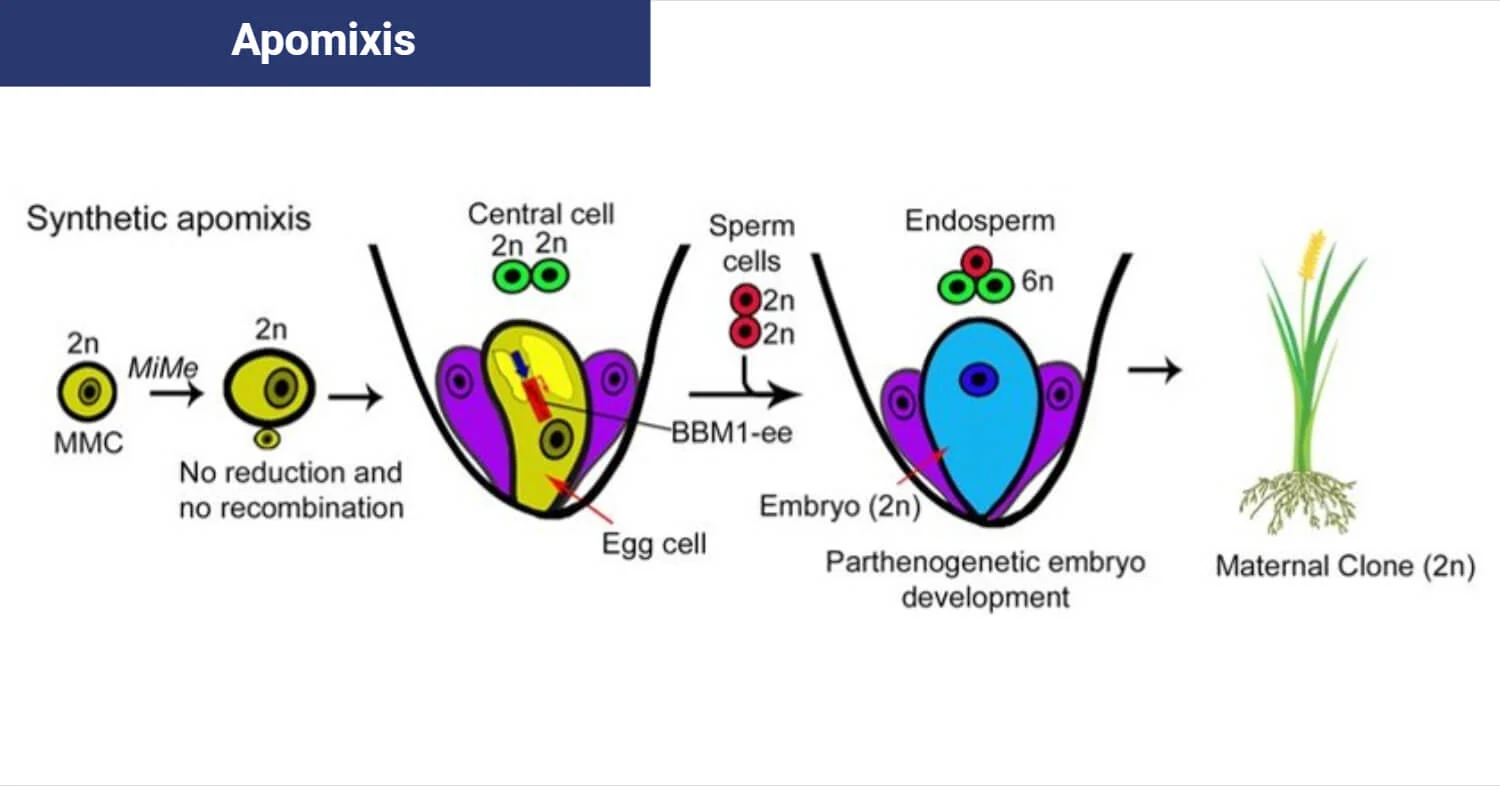
Synthetic apomixis in rice produces a maternal-clone embryo; fertilisation supports endosperm development.

Apomixis in simple language

  • Normally, a new plant grows from a seed formed after an egg cell joins with a sperm cell from pollen. The new plant receives a combination of genetic material from both.

  • Apomixis lets a plant produce a new plant through a seed without fertilising the egg. The resulting plant can be a genetic copy, or clone, of the mother plant.

  • Think of a high-yielding hybrid rice plant. Seeds collected from it normally produce offspring with different combinations of traits. Apomixis could preserve the successful combination when those seeds are planted again.

  • Hybrid vigour is the superior performance sometimes achieved by crossing genetically different parents. Apomixis could preserve that advantage in subsequent generations.

  • Experimental success in rice has reached around 90%, but dependable field performance and large-scale seed production remain challenges.

Reading the diagram from left to right

Part of the image What is happening?
MMC, marked 2n This is the megaspore mother cell, a cell inside the flower involved in forming the female reproductive cells. 2n means it has two sets of chromosomes, which carry genetic information.
MiMe: “No reduction and no recombination” MiMe means Mitosis instead of Meiosis. Normally, meiosis halves the chromosome number and reshuffles genetic material. MiMe bypasses this process, so the egg keeps two chromosome sets and the mother plant’s genetic combination.
Egg cell and BBM1-ee BABY BOOM 1, or BBM1, is activated specifically in the egg cell. It acts like a developmental switch, allowing the egg to start forming an embryo, the young plant inside the seed, without joining with a sperm cell.
Embryo, marked 2n The embryo develops from the unfertilised egg. This is called parthenogenesis. It retains the mother plant’s genetic combination.
Central cell, sperm cells and endosperm, marked 6n Fertilisation still occurs in a different cell to make the endosperm, the tissue that feeds the embryo. Here, the central cell contains two 2n nuclei; joining with a 2n sperm nucleus produces six chromosome sets: 2n + 2n + 2n = 6n.
Maternal clone, marked 2n The seed grows into a plant genetically matching the mother plant. The food tissue has 6n in this illustrated system, but the embryo and resulting plant remain 2n.

Why does this matter?

  • The embryo forms without fertilisation, but the endosperm still needs fertilisation in the system shown. Thus, the sperm cells in the image do not contradict apomixis.
  • This approach could help farmers retain desirable hybrid traits and reduce the need to buy fresh hybrid seed every season. Reliable field performance and affordable access are still necessary.

What about wheat?

  • HB4 wheat contains a sunflower-derived gene associated with drought tolerance. It is a transgenic crop, rather than an example of editing wheat’s existing DNA alone.
  • Public research, biosafety assessment, affordable seed access and clear licensing arrangements will determine how widely farmers benefit from these technologies.

Environment

3

Salt marshes as natural coastal protection

Environment

Why in news?

  • Research has demonstrated how salt-marsh vegetation and underground roots can reduce wave energy and protect coastal soil during storms.

What are salt marshes?

  • Salt marshes are coastal wetlands dominated by salt-tolerant grasses and other low-growing plants.
  • They occur in areas periodically flooded by tides.
  • India’s salt marshes have been estimated to cover around 290 square kilometres, with important areas in Gujarat and smaller stretches elsewhere along the coast.

How do they protect coastlines?

  • Plant stems slow moving water and reduce wave energy.
  • Dense roots bind sediment together, making it harder for waves to wash the soil away.
  • Marshes also trap sediment, support wildlife and store carbon in waterlogged soils.

Important findings

  • Researchers tested 306 square metres of a living Dutch marsh in a 300-metre-long wave flume, a tank that generates controlled waves.
  • The marsh lost only about 7 millimetres of elevation, even though its above-ground vegetation lost 75–80% of its biomass.
  • Plants reduced the height of 75-centimetre waves by 6–22%, but reduced two-metre waves by only up to 6%.

What does this mean?

  • Roots can protect soil even when much of the visible vegetation is damaged.
  • Marshes offer useful protection, but their effectiveness varies with vegetation, water depth, wave size and local geography.
  • These results cannot be applied unchanged to every Indian coastline. Marsh conservation should complement coastal planning and other protective measures.

Environment

4

Graded Response Action Plan and Delhi’s winter pollution

Environment

Why in news?

  • Worsening air quality led to the activation of Stage I of the Graded Response Action Plan, or GRAP, in Delhi-NCR.

What is GRAP?

  • GRAP is a system of temporary emergency measures that become stricter as air pollution worsens.
  • The Commission for Air Quality Management in the National Capital Region and Adjoining Areas, or CAQM, directs its implementation.
  • Measures can respond to both recorded pollution and forecasts of deteriorating air quality.
Stage Delhi’s Air Quality Index Broad response
Stage I: Poor 201–300 Authorities strengthen dust control, waste-burning prevention and enforcement of existing pollution rules.
Stage II: Very Poor 301–400 Authorities intensify measures such as road cleaning, pollution checks and public-transport support.
Stage III: Severe 401–450 Restrictions extend to specified construction activities and categories of polluting vehicles, subject to exemptions.
Stage IV: Severe Plus Above 450 More stringent restrictions apply to construction, vehicle entry and other activities.
  • Higher stages add to measures already operating under lower stages.

Why does pollution worsen in winter?

  • Low wind speeds reduce the dispersal of pollutants.
  • A temperature inversion, where warmer air sits above cooler air near the ground, can trap pollution.
  • Vehicle exhaust, industrial emissions, dust, waste burning, crop-residue burning and firecrackers contribute to the pollution load.

Has GRAP solved the problem?

  • Average winter AQI fluctuated from 280 in 2022–23 to 304 in 2023–24, 285 in 2024–25 and 295 in 2025–26.
  • These figures show no consistent improvement, although they do not establish what pollution levels would have been without GRAP.
  • Emergency restrictions need year-round emission reductions, cleaner transport and industry, dust management and regional coordination.

Separate winter restrictions

  • Delhi has also announced calendar-based winter restrictions concerning certain vehicles and parking charges.
  • These differ from GRAP because they apply during specified dates, rather than depending solely on the prevailing AQI.

Economy

5

Mineral exchanges and transparent mineral trading

Economy

Why in news?

  • Companies are preparing to establish mineral exchanges under the Mineral Exchange Rules, 2026, creating organised platforms for mineral trading.

What is a mineral exchange?

  • It is an electronic marketplace where multiple buyers and sellers can trade minerals through standardised contracts.
  • Delivery-based trading involves the actual supply of minerals, rather than merely exchanging financial contracts.
  • The initial emphasis is expected to be on ores such as iron ore, bauxite, limestone and manganese.

Legal and regulatory framework

  • Section 18B of the Mines and Minerals (Development and Regulation) Act, 1957 enables the development of mineral markets through exchanges.
  • The Indian Bureau of Mines, under the Ministry of Mines, registers and regulates exchanges within this framework.
  • Coal, lignite and atomic minerals fall outside this particular mineral-exchange framework.

Why are exchanges useful?

  • Price discovery means finding a market price through interaction between buyers and sellers.
  • Visible prices and quality specifications can help smaller miners negotiate and help manufacturers plan costs.
  • Exchanges may reduce information asymmetry, where one side of a transaction knows substantially more than the other.
  • PTC India has approved an investment of ₹65 crore in a subsidiary intended to establish a mineral exchange.

Challenges

  • Minerals vary in grade, moisture and impurities, so reliable testing is essential.
  • Transport, storage and timely delivery remain necessary even when trading happens online.
  • Success requires enough buyers and sellers, along with safeguards against manipulation and cartelisation.
  • An exchange provides a trading platform; it does not itself grant mining rights or environmental approval.

Tawang

Geography

Tawang, in western Arunachal Pradesh near Bhutan and Tibet, is hosting the fourteenth International Tourism Mart from October 29–31, 2026.

Sign in to read this story

Friday, 30 Oct

Science & Technology

1

Digital-arrest fraud and institutional safeguards

Science & Technology

Why in news

  • The Supreme Court called for financial institutions to fully compensate digital-arrest victims when the loss results from the institution’s failure to exercise due diligence.
  • It also sought stronger safeguards against unusual transactions and information from States on investigations and prosecutions.

What is a digital-arrest scam?

  • Fraudsters impersonate police officers, investigating agencies or other public authorities and falsely accuse a person of involvement in a crime.
  • They use threatening calls, forged documents and continuous video contact to frighten victims into transferring money for supposed verification, bail or clearance.
  • “Digital arrest” is not a legally recognised form of arrest. A caller cannot place someone in lawful custody through a video call.

What safeguards did the court discuss?

  • Banks should identify transactions that differ sharply from an account’s normal pattern and temporarily interrupt suspicious transfers for verification.
  • Due diligence means taking reasonable steps to identify customers, monitor transactions and investigate warning signs.
  • Know Your Customer (KYC) checks establish a customer’s identity. Effective protection also requires continuing monitoring because a correctly identified account can subsequently be misused.
  • Authorities should examine the responsibility of banks and digital platforms, including accounts that impersonate law-enforcement agencies.

Important developments

Development Details
The proposed banking framework remained under consideration. The government indicated that the proposed RBI KYC amendment directions would be notified by 30 November 2026 and operationalised by 31 December 2026.
Platforms reported action against suspicious accounts. WhatsApp submitted that it had banned approximately 9,400 suspicious accounts.
The court sought information on criminal proceedings. States were directed to provide details of registered cases and the progress of investigation and prosecution.

Why does institutional responsibility matter?

  • Awareness alone cannot prevent every fraud because offenders exploit fear, isolation and convincing impersonation.
  • A mule account receives or transfers criminal proceeds, sometimes through an account-holder recruited to move money for others. Detecting such accounts can interrupt the movement of stolen funds.
  • Compensation linked to proven institutional negligence can encourage stronger preventive systems.
  • Suspicious-transaction controls also need prompt review so that genuine customers are not unnecessarily denied access to their money.
  • The proceedings should not be read as an automatic compensation guarantee for every cyber-fraud loss; the proposed framework links responsibility to failures in institutional diligence.

Polity

2

Administrative independence of the National Company Law Tribunal

Polity

Why in news

  • The Supreme Court questioned the Ministry of Corporate Affairs’ influence over staffing at the National Company Law Tribunal and the outsourcing of staff appointments.
  • It directed the heads of the tribunal and its appellate tribunal to submit proposals on staffing, buildings and infrastructure within four weeks.

What are the two tribunals?

Institution Role
The National Company Law Tribunal (NCLT) is a specialised adjudicatory body constituted under Section 408 of the Companies Act, 2013. It decides specified company-law matters, including mergers, oppression and mismanagement, and corporate insolvency matters under the Insolvency and Bankruptcy Code, 2016.
The National Company Law Appellate Tribunal (NCLAT) was constituted under Section 410. It hears appeals against NCLT orders and certain decisions of other regulators under the relevant laws.
  • Both institutions began functioning on 1 June 2016.
  • Their creation followed the Justice Eradi Committee’s recommendation for a specialised framework for company-law and insolvency matters.
  • The NCLT includes judicial and technical members, combining legal expertise with knowledge of corporate affairs.

What does the law say about staff?

  • Section 418 requires the Central Government, in consultation with the tribunals, to provide the officers and employees needed for their work.
  • These employees discharge their functions under the general supervision and control of the NCLT President or NCLAT Chairperson, or a member authorised by them.
  • Government responsibility for providing resources must therefore be distinguished from control over the tribunal’s daily judicial administration.

Why is administrative independence important?

  • Judicial independence depends on more than the freedom to write judgments. It also requires reliable staff, functioning registries, adequate buildings and control over daily administration.
  • Staff handle filings, records, case listings and communications. Dependence on outside contractors can weaken continuity, accountability and confidentiality.
  • Article 50, a Directive Principle of State Policy, calls for separating the judiciary from the executive in the State’s public services.
  • Tribunal-independence judgments, including the Madras Bar Association cases, emphasise safeguards against excessive executive influence over bodies performing judicial functions.
  • Delays in corporate insolvency proceedings can reduce the value of distressed businesses and postpone recovery for creditors and other stakeholders.

Polity

3

Collegium consultations and judicial independence

Polity

Why in news

  • Former Supreme Court judge Justice Sanjay Kishan Kaul raised concerns that proposed judicial appointments may have been discussed with the Union government before formal collegium deliberations.
  • The concern is whether seeking prior executive approval could weaken collective judicial decision-making. The allegation should not be treated as an established judicial finding.

Constitutional framework

  • Article 124 governs the appointment of Supreme Court judges by the President after the constitutionally required consultations.
  • Article 217 governs High Court appointments and provides for consultation with the Chief Justice of India, the State’s Governor and, for judges other than the Chief Justice, the Chief Justice of the High Court.
  • The Constitution does not expressly mention a collegium. The system developed through Supreme Court judgments interpreting the consultation requirement.

How did the system evolve?

Decision Main development
The First Judges Case, 1981, gave primacy to the executive. Consultation with the judiciary was not treated as judicial concurrence.
The Second Judges Case, 1993, established judicial primacy. The Chief Justice of India’s opinion had to emerge through consultation with senior judges.
The Third Judges Case, 1998, clarified collective consultation. It expanded the Supreme Court appointments collegium to the Chief Justice of India and four senior-most judges.
The NJAC judgment, 2015, restored the collegium framework. The court struck down the Ninety-ninth Constitutional Amendment and the National Judicial Appointments Commission Act for violating judicial independence, part of the Constitution’s basic structure.

Who participates in appointments?

  • For Supreme Court appointments, the collegium comprises the Chief Justice of India and the four senior-most Supreme Court judges.
  • For High Court judge appointments, proposals begin with the concerned High Court’s Chief Justice and its two senior-most judges.
  • At the Supreme Court stage, the Chief Justice of India consults the two senior-most Supreme Court judges on High Court judge appointments.
  • The executive examines recommendations and provides relevant inputs. The President makes the formal appointment.
  • The government may return a recommendation for reconsideration. A recommendation properly reiterated under the applicable procedure is expected to be acted upon.

What was the NJAC?

  • The National Judicial Appointments Commission (NJAC) was intended to replace the collegium.
  • Its proposed six-member composition included the Chief Justice of India, two senior Supreme Court judges, the Union Law Minister and two eminent persons.
  • Its invalidation does not prevent every possible reform; a replacement arrangement must satisfy constitutional requirements, especially judicial independence.

Concerns and possible reforms

  • Collective deliberation protects appointments from depending on one individual’s preferences or private understandings.
  • At the same time, the collegium faces criticism over unclear selection criteria, limited disclosure of reasons, inadequate diversity and appointment delays.
  • The Memorandum of Procedure sets out the appointment process. Clear criteria, recorded reasons and predictable timelines can improve accountability.
  • Executive participation permitted by the Constitution is different from allowing the executive an informal veto before the collegium forms its view.

Environment

4

Delhi Declaration on local climate action

Environment

Why in news

  • The ARISE Cities Forum 2026, held in New Delhi on 27–28 October, adopted the Delhi Declaration on Local Action for Global Climate Goals.
  • The declaration seeks a stronger role for cities and local governments in implementing climate commitments ahead of COP31 in Antalya, Türkiye.

What is the ARISE Cities Forum?

  • ARISE stands for Adaptive, Resilient, Innovative, Sustainable and Equitable.
  • Launched in 2025, it is an annual forum led by ICLEI South Asia, part of the global network known as ICLEI—Local Governments for Sustainability.
  • The 2026 edition was organised with the National Institute of Urban Affairs, with support from the Ministry of Housing and Urban Affairs.
  • It brought together more than 200 participants from over 50 cities across more than 18 countries.
  • Participants include local-government representatives, researchers and development partners. Participation is different from membership of an intergovernmental treaty organisation.
  • The forum operates through dialogue and shared declarations; it does not have treaty-negotiating authority or a separate permanent intergovernmental secretariat.

Main commitments

Priority Meaning
The declaration calls for multilevel climate action. National, State and local governments should coordinate their plans, responsibilities and implementation.
It seeks stronger adaptation. Cities should prepare for hazards such as extreme heat, flooding and water stress.
It supports a circular economy. Cities should reduce waste and keep products and materials in use through repair, reuse and recycling.
It calls for a just transition. Changes towards cleaner energy and livelihoods should protect affected workers and vulnerable communities.
It seeks accessible climate finance. Local governments need resources and the capacity to prepare and implement suitable projects.
It supports science and community participation. Decisions should use reliable data and involve young people and affected communities.
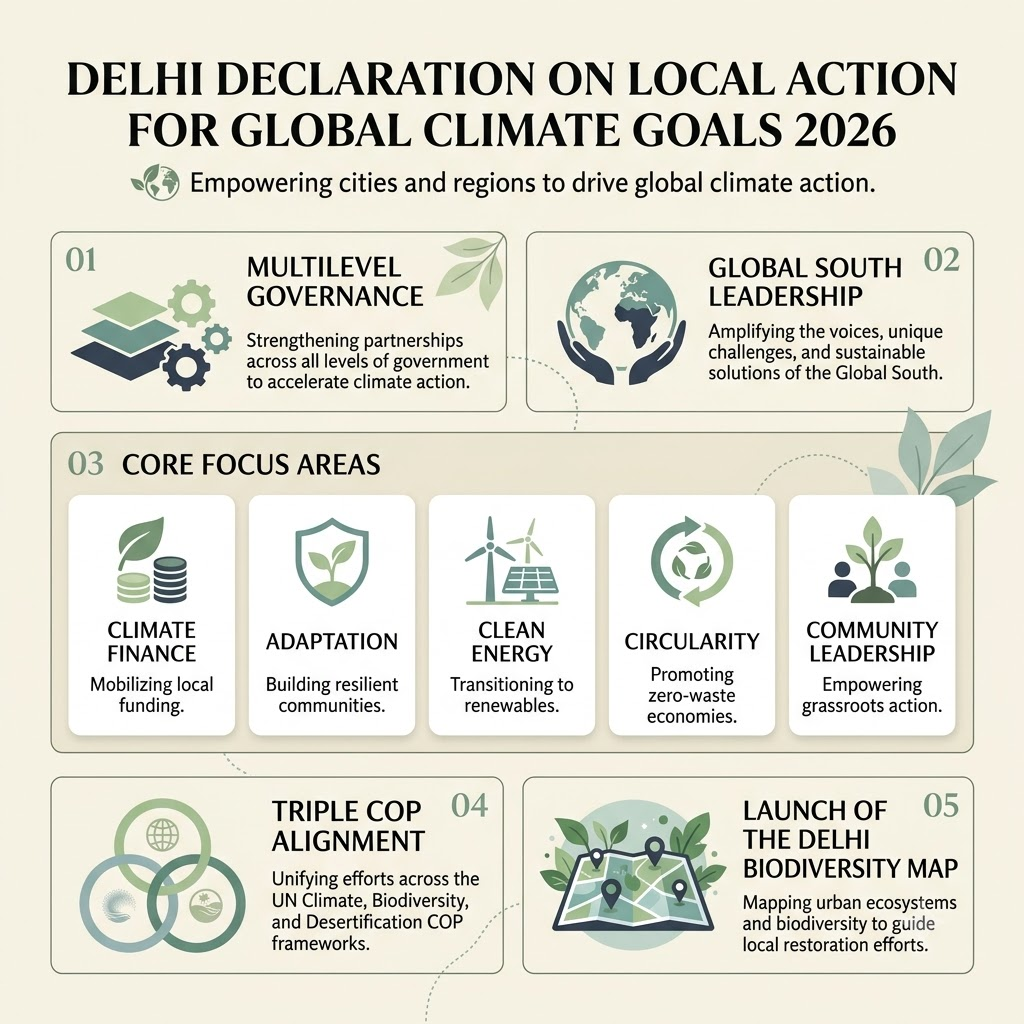
Infographic outlining multilevel governance, Global South leadership, climate finance, adaptation, clean energy, circularity and community leadership under the Delhi Declaration 2026.
Selected priorities of the Delhi Declaration 2026 connect local climate action with finance, adaptation and community participation. The Delhi Biodiversity Map was launched at the forum.

Connection with national and global commitments

  • Nationally Determined Contributions (NDCs) are countries’ climate-action commitments under the Paris Agreement.
  • Cities help implement these commitments through transport, buildings, waste management, water services and land-use decisions.
  • COP31 is the thirty-first Conference of the Parties to the United Nations Framework Convention on Climate Change. It is scheduled for 9–20 November 2026.
  • The ARISE declaration expresses local-government priorities; it is not itself a negotiated COP decision or a legally binding international treaty.

Significance and limitations

  • Many climate risks are experienced locally, while funding and decision-making powers often sit at higher levels of government.
  • In India, Article 243W and the Twelfth Schedule provide a constitutional connection to municipal functions, subject to powers devolved through State laws.
  • The declaration’s value depends on funded projects, capable institutions and measurable implementation. Adoption alone does not transfer money or expand municipal powers.

Government Schemes

5

Diversion of foodgrains from the Public Distribution System

Government Schemes

Why in news

  • Karnataka authorities seized 17.78 lakh kilograms of rice and other foodgrains meant for public distribution during a three-month crackdown on illegal diversion.
  • Officials inspected vehicles and private warehouses to identify supplies allegedly being transported or stored illegally.

What is the Public Distribution System?

  • The Public Distribution System (PDS) distributes foodgrains to eligible households through fair-price shops, commonly called ration shops.
  • The Targeted Public Distribution System (TPDS) directs benefits towards identified eligible households.
  • The National Food Security Act (NFSA), 2013, makes specified foodgrain entitlements a legal right. It provides for coverage of up to 75% of the rural population and 50% of the urban population, with different coverage shares across States.
Beneficiary category Monthly entitlement
Priority Households (PHH) are identified by State and Union Territory governments under the applicable criteria. Each eligible person receives 5 kilograms of foodgrains per month.
Antyodaya Anna Yojana (AAY) covers the poorest households. Each eligible household receives 35 kilograms of foodgrains per month, irrespective of household size.
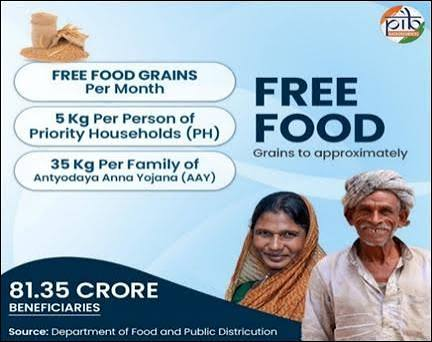
Infographic showing monthly NFSA entitlements of five kilograms per Priority Household member and thirty-five kilograms per Antyodaya household.
Monthly NFSA entitlements are 5 kg per person for Priority Households and 35 kg per Antyodaya household. The 81.35-crore figure denotes the coverage ceiling based on Census 2011, not current enrolment.
  • These NFSA entitlements are currently supplied free of cost under the Pradhan Mantri Garib Kalyan Anna Yojana, with continuation approved for five years from 1 January 2024.
  • PDS supplements household food requirements; it does not provide an entire balanced diet.

How does it function?

  • The Union government, through the Food Corporation of India and other procurement arrangements, organises procurement, storage, movement and central allocation of foodgrains.
  • State and Union Territory governments identify beneficiaries, issue ration cards, arrange distribution within their territories and supervise fair-price shops.
  • One Nation One Ration Card enables eligible beneficiaries, especially migrants, to obtain their foodgrain entitlement from participating fair-price shops away from their home location.
  • Electronic point-of-sale devices record distribution and support beneficiary authentication.
  • The NFSA provides for grievance redressal, disclosure of records, social audits and vigilance committees to strengthen accountability.
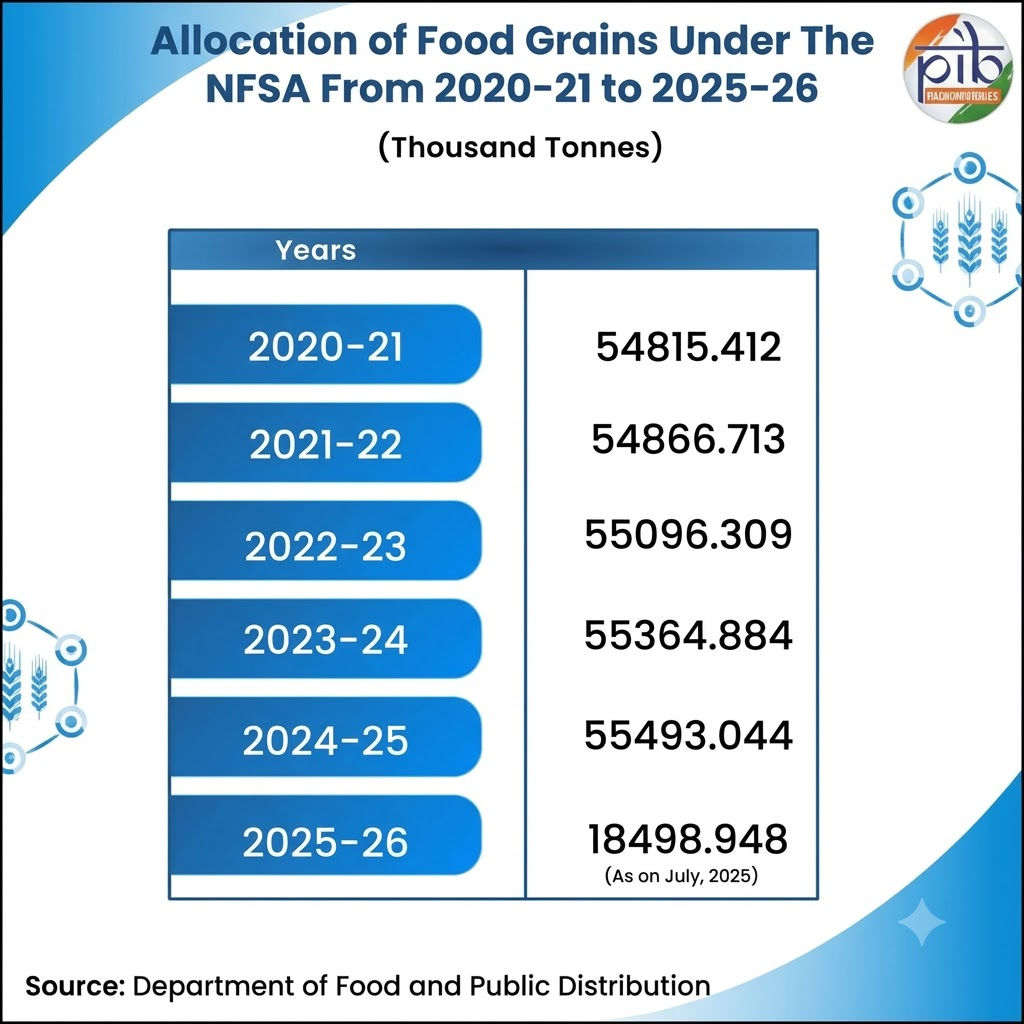
Historical NFSA foodgrain allocation table from 2020–21 to 2025–26, with a partial figure for 2025–26.
NFSA allocations are shown in thousand tonnes. The 2025–26 figure covers only the period up to July 2025 and is not comparable with complete financial years.

Significance

  • Food security improves because eligible households receive a predictable supply of staple foodgrains.
  • Household purchasing power increases because lower expenditure on cereals leaves more money for other food, healthcare, education and essential needs.
  • Vulnerable households receive protection during unemployment, income shocks and increases in market food prices.
  • Portability supports migrant workers by reducing dependence on the ration shop linked to their original residence.
  • Legal entitlements strengthen accountability because beneficiaries can seek redress when entitled supplies are denied.

Challenges

  • Leakages and diversion occur when grain is illegally redirected to commercial markets, falsely recorded as distributed or supplied in quantities below the entitlement.
  • Exclusion errors leave eligible people outside the system because of identification mistakes, outdated records or difficulties obtaining and updating ration cards. Inclusion errors allow ineligible or duplicate beneficiaries to remain.
  • Authentication and connectivity failures can interrupt access, particularly for older people, manual workers and people in poorly connected areas. Alternative arrangements are necessary to prevent denial of food.
  • Storage and transport weaknesses can cause deterioration, contamination, delays and losses before grain reaches ration shops.
  • Limited dietary diversity means that cereal distribution alone cannot adequately address deficiencies in protein, vitamins and minerals.
  • Fiscal and environmental pressures arise from procurement, storage and distribution costs, while procurement patterns concentrated on rice and wheat can discourage crop diversification and intensify water use in stressed regions.
  • Weak monitoring and grievance redressal can allow irregularities to continue. Digital records must be supported by physical inspections, social audits and effective action on complaints.

Saturday, 31 Oct

Polity

1

Women’s Equal Access to Occupations

Polity

Why in news

  • The Kerala High Court struck down a rule prohibiting women from working in toddy shops. Women’s expanding roles in coal mining also highlighted the importance of removing occupational barriers.

Constitutional provisions

  • Article 14 guarantees equality before the law and equal protection of the laws.
  • Article 15(1) prohibits the State from discriminating on grounds including sex. Article 15(3) permits special provisions for women and children.
  • Article 19(1)(g) protects citizens’ freedom to practise a profession or carry on an occupation, trade or business, subject to reasonable restrictions.
  • Article 21 protects life and personal liberty, including dignity.
  • The central principle is that workplace safety should be secured through effective safeguards. General assumptions about women’s vulnerability cannot automatically justify excluding them from employment.

Women in mining

  • A 2019 exemption under the Mines Act, 1952, relaxed restrictions on women’s employment in above-ground mines at night and in specified underground roles, subject to safeguards.
  • These safeguards included written consent, deployment in groups of at least three and appropriate safety procedures.
  • At Singareni Collieries Company Limited, women account for 2,199 of 39,743 employees, or approximately 5.5% of the workforce.
  • 112 women work in underground mines, while 47 women have been trained and deployed in coal-mining activities at the Khairagura project.
  • Thirteen women have completed training for operating heavy vehicles used in mining.

Significance and challenges

  • Wider occupational access can improve women’s earnings, career progression and participation in technical work.
  • Employers must provide suitable protective equipment, sanitation, safe transport, training and effective mechanisms against sexual harassment.
  • Job requirements should be assessed objectively, while recruitment and promotion should avoid gender stereotypes.

Polity

2

Prison Overcrowding and Reform

Polity

Why in news

  • Seventeen remand prisoners escaped from Theni district jail on 26 October and were recaptured within 42 hours. The incident exposed weaknesses in prison capacity, staffing and security.

What the incident revealed

  • The jail held 334 prisoners against a capacity of about 200, giving it an occupancy rate of approximately 167%.
  • Only six personnel were on duty during the incident, against a total sanctioned staff strength of 33. Sanctioned strength and personnel available for a particular shift are different measures.
  • Investigators also identified a non-functional alarm and inadequate lighting.
  • One prisoner had reportedly obtained bail but remained detained because he could not arrange the required surety, highlighting barriers between bail orders and actual release.

Constitutional and institutional framework

  • Prisons fall under Entry 4 of the State List in the Seventh Schedule. States primarily administer prisons, while the Union provides guidance and support.
  • Article 21 protects prisoners against inhuman treatment and supports humane detention conditions.
  • Article 39A directs the State to promote equal justice and free legal aid.
  • An undertrial prisoner faces pending criminal proceedings and has not been convicted in that case.
  • The Model Prisons and Correctional Services Act, 2023, provides a framework for States to improve prison management and rehabilitation. It does not automatically replace every State’s prison law.

Priorities for reform

  • Regular review of undertrial detention, timely legal aid and assistance in completing bail requirements can reduce unnecessary imprisonment.
  • Adequate staffing, functioning alarms, secure access controls and emergency drills are essential.
  • Health care, mental-health support, education and vocational training should accompany security measures.
  • Appropriate classification of prisoners can improve safety and support rehabilitation.

Science & Technology

3

NVS-03 and India’s NavIC Navigation System

Science & Technology

Why in news

  • The Indian Space Research Organisation launched NVS-03 aboard GSLV-F18 from Sriharikota on 30 October 2026, placing it in the intended transfer orbit.
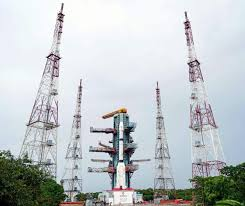
Illustrative launch vehicle on its launch pad.
An illustrative launch vehicle on its launch pad.

Key features

  • NVS-03 is the third satellite in the next-generation navigation series.
  • It weighs approximately 2,250 kg and has a planned mission life of 12 years.
  • It carries an indigenous atomic clock, alongside procured clocks.
  • It transmits navigation signals in the L1, L5 and S bands. These are radio-frequency bands used to carry signals from satellites to receivers.
  • Adding the widely used L1 band can support broader compatibility with navigation devices, provided their hardware and software support NavIC.

What is NavIC?

  • Navigation with Indian Constellation, or NavIC, is India’s independent regional satellite-navigation system.
  • It provides Position, Navigation and Timing, meaning information about location, movement and precise time.
  • Its primary service area covers India and extends approximately 1,500 km beyond the Indian landmass.
  • It provides a Standard Positioning Service for civilian users and a Restricted Service for authorised users.

How it works

  • Navigation satellites broadcast their position and precisely timed signals. A receiver uses signal travel times from several satellites to calculate its location.
  • Atomic clocks provide highly stable timekeeping. Small timing errors can produce significant errors in the calculated position.
  • A geosynchronous transfer orbit is an intermediate elliptical orbit. Successful placement there must be followed by the manoeuvres and checks needed for operational service.

Significance and limitations

  • NavIC supports transport, maritime navigation, disaster response, surveying and strategic operations.
  • NVS-03 strengthens the constellation after earlier clock failures and difficulties with replacement satellites.
  • Reliable service also requires healthy satellites, functioning ground infrastructure and wider receiver adoption.

Economy

4

India’s Poverty Reduction and Remaining Disparities

Economy

Why in news

  • An updated poverty assessment highlighted a substantial reduction in deprivation, while pointing to geographical concentration of poverty and weak earnings growth.

Major findings

Measure Change
Extreme poverty declined. The share below $3 a day fell from 27.1% in 2011 to 2.6% in 2023.
Poverty at the lower-middle-income threshold declined. The share below $4.20 a day fell from 57.7% to 16.1% over the same period.
The number below the $4.20 threshold fell substantially. An estimated 496 million people moved above this line.
Earnings inequality remained pronounced. Median earnings among the top 10% of workers were approximately 13 times those of the bottom 10% in 2023.

Understanding the measures

  • Monetary poverty identifies people whose income or consumption falls below a specified threshold. India’s international poverty estimates primarily draw on household consumption data.
  • These international thresholds use 2021 purchasing power parity, which adjusts for differences in what money can buy across countries. They should not be converted using the current market exchange rate.
  • Multidimensional poverty examines overlapping disadvantages in areas such as health, education and living conditions.
  • Different multidimensional indices use different indicators and methods; their estimates should not be treated as directly interchangeable.

Types of Poverty and Associated Concepts

  • Absolute poverty exists when a person’s resources fall below a defined minimum needed to meet basic necessities. A poverty line provides the threshold for identifying it.
  • Relative poverty measures deprivation compared with prevailing living standards, often using a proportion of median income. It highlights exclusion and inequality within a society.
  • Monetary poverty measures inadequate income or consumption expenditure. Multidimensional poverty captures overlapping disadvantages in health, education and living conditions.
  • Chronic poverty persists over a long period and may continue across generations. Transient poverty occurs when shocks such as unemployment, illness, crop failure or disasters temporarily push a household into poverty.
  • The poverty headcount ratio shows the percentage of people below the poverty line. The poverty gap measures how far below that line poor people are, capturing the depth of poverty.

Understanding India’s National Multidimensional Poverty Index

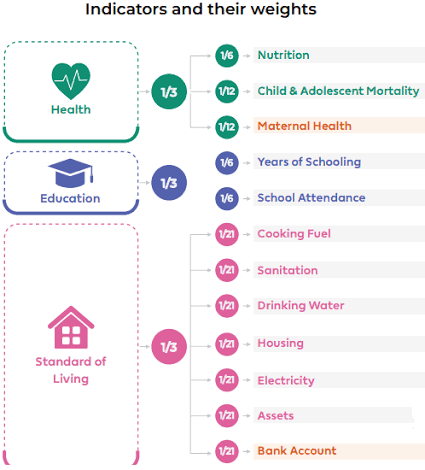
  • NITI Aayog’s National Multidimensional Poverty Index, or National MPI, uses 12 indicators across three dimensions: health, education and standard of living.
  • Each dimension carries one-third of the total weight, while individual indicators have different weights.
  • A person is identified as multidimensionally poor when their household’s weighted deprivation score reaches one-third or more.
  • MPI = Incidence × Intensity. Incidence measures the proportion of people who are poor; intensity measures the average share of weighted deprivations they experience.
  • The global MPI uses 10 indicators. India’s National MPI adds maternal health and bank accounts, so the two indices should not be treated as identical.
India’s National MPI indicators and weights across health, education and standard of living.
India’s National MPI assigns equal weight to its three dimensions and measures deprivation through 12 indicators.

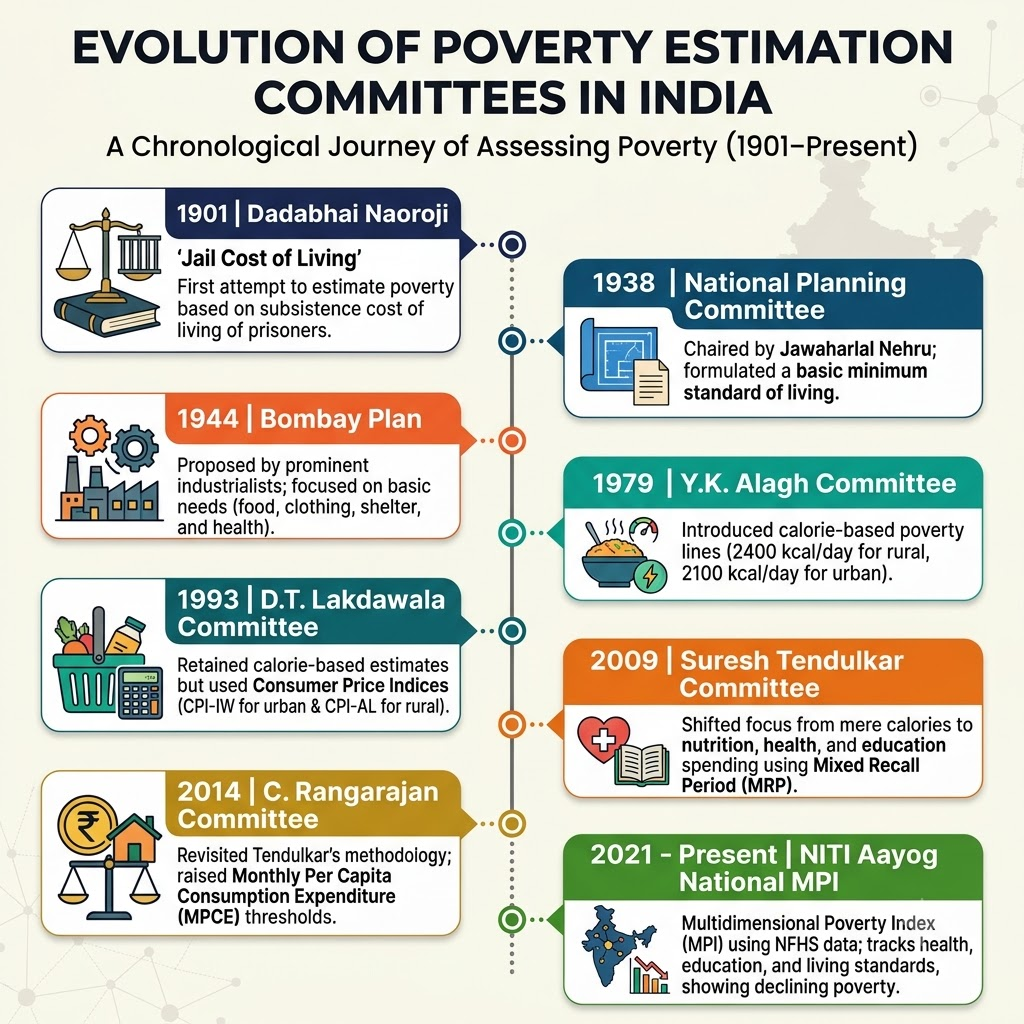
Major Poverty-Estimation Committees

Committee and report year Main contribution
Y. K. Alagh Task Force, 1979 It linked rural and urban poverty-line consumption baskets to daily calorie requirements of 2,400 kcal and 2,100 kcal per person, respectively.
D. T. Lakdawala Expert Group, 1993 It recommended State-specific poverty lines and their updating using separate rural and urban consumer-price indices, while retaining the earlier calorie-linked framework.
Suresh Tendulkar Expert Group, 2009 It moved away from directly anchoring poverty lines to calorie norms and better accounted for private spending on health and education and differences in prices.
C. Rangarajan Expert Group, 2014 It proposed separate rural and urban consumption baskets, combining nutritional requirements with essential non-food expenditure, and recommended higher poverty lines than the Tendulkar approach.
  • These committees primarily addressed consumption-based monetary poverty. Their poverty lines differ from both international purchasing-power-parity thresholds and multidimensional poverty measures.
  • Committee dates above refer to their report years, rather than necessarily the years in which they were constituted.
Timeline of poverty estimation in India, from Dadabhai Naoroji to the National Multidimensional Poverty Index.
The evolution of poverty estimation in India, from subsistence-based estimates to multidimensional measures.

Government Initiatives to Reduce Poverty

Initiative How it addresses poverty
Viksit Bharat–Guarantee for Rozgar and Ajeevika Mission (Gramin), or VB–G RAM G The employment framework effective from 1 July 2026 provides a statutory guarantee of 125 days of wage employment per financial year to rural households whose adult members volunteer for unskilled manual work. It supports income security and rural assets.
Deendayal Antyodaya Yojana–National Rural Livelihoods Mission It organises rural poor women into self-help groups and supports access to credit, skills, enterprises and sustainable livelihoods.
Pradhan Mantri Garib Kalyan Anna Yojana It provides free foodgrains to eligible beneficiaries under the National Food Security Act, reducing food insecurity and protecting household consumption.
Pradhan Mantri Awaas Yojana–Gramin It assists eligible rural households in obtaining permanent houses with basic amenities, addressing housing deprivation.
Ayushman Bharat–Pradhan Mantri Jan Arogya Yojana It provides eligible families with cashless cover of up to ₹5 lakh annually for specified secondary and tertiary hospitalisation, reducing the risk of medical expenses pushing them into poverty.
National Social Assistance Programme It provides social assistance, including pensions for eligible elderly people, widows and persons with disabilities, helping households with limited earning capacity.
  • Effective poverty reduction combines productive employment and livelihoods with food security, health care, housing, education and social protection.
  • Coverage gaps, exclusion errors, delayed benefits and weak service quality can reduce the impact of these programmes.

What supported the decline?

  • Rising household consumption, increased employment and additional earners within households contributed to improved living standards.
  • Social transfers, including food support, helped protect household consumption.

Continuing challenges

  • Poverty remains concentrated in particular regions and communities.
  • Employment growth in low-productivity activities may increase the number working without substantially improving real earnings.
  • People just above a poverty line can fall below it following illness, unemployment, inflation or climate-related losses.
  • Sustained progress therefore requires productive jobs, better public services and effective social protection.

Environment

5

PAVAN-I3C: Coordinating Air-Pollution Monitoring

Environment

Why in news

  • The Commission for Air Quality Management reviewed its newly developed PAVAN-I3C centre, which combines pollution monitoring with information on enforcement and compliance across Delhi and the National Capital Region.

What is PAVAN-I3C?

  • PAVAN stands for Platform for Air quality Vigilance and Analytics for NCR.
  • I3C refers to its integrated command and control centre.
  • It brings information from different agencies onto a common platform to help officials detect pollution, analyse its sources and initiate action.

What does it monitor?

  • The platform integrates more than 30 data streams and digital interfaces.
  • It draws information from 111 Continuous Ambient Air Quality Monitoring Stations, which measure pollutants in surrounding air.
  • It incorporates monitoring information concerning over 2,300 industries and more than 3,200 active construction sites.
  • Other inputs include weather conditions, satellite-detected crop fires, traffic congestion, landfill activity and public complaints.

How does it support enforcement?

  • Industrial monitoring systems measure pollutants released from industrial sources, while cameras and sensors can help identify dust-related violations at construction sites.
  • Departures from prescribed standards or directions can trigger alerts to the responsible agency.
  • Shared information can reduce delays between detecting a violation, assigning responsibility and checking corrective action.

Institutional significance and challenges

  • The Commission for Air Quality Management is a statutory body under a 2021 law, responsible for coordinating air-quality management in the National Capital Region and relevant adjoining areas.
  • The Graded Response Action Plan prescribes escalating pollution-control measures. PAVAN-I3C supports monitoring and implementation of such measures.
  • Its effectiveness depends on reliable sensors, timely data, agency coordination and actual field enforcement.
  • Monitoring must be accompanied by sustained reductions in emissions from transport, industry, waste burning and other sources.

Niyamgiri Hills

Geography

Niyamgiri lies in Odisha’s Eastern Ghats, across Rayagada and Kalahandi districts, and is home to the Dongria Kondh, a Particularly Vulnerable Tribal Group.

Sign in to read this story

Sunday, 1 Nov

Polity

1

Social-media takedowns and safeguards

Polity

Why in news

  • Recent removals of social-media posts and accounts have raised concerns about government directions, automated moderation and users’ access to remedies.
  • Advisories issued on 8 and 10 October addressed misleading visuals, public-order risks and the recommendation of such material.

Legal framework

  • The Information Technology Act, 2000, provides the legal framework for blocking unlawful online content and determining intermediaries’ responsibilities.
  • The Information Technology Rules, 2021, as amended, prescribe platforms’ duties, takedown procedures and grievance-redressal requirements.

Constitutional significance

  • Article 19(1)(a) protects freedom of speech and expression.
  • Restrictions must fall within Article 19(2) and satisfy requirements of legality, necessity and proportionality.
  • In Shreya Singhal v. Union of India (2015), the Supreme Court struck down Section 66A, upheld Section 69A’s blocking framework and restricted the interpretation of “actual knowledge” under Section 79.

Concerns and remedies

  • Short deadlines may encourage platforms to remove lawful material when its context is difficult to assess.
  • Automated systems can misread satire, political criticism and regional-language content.
  • Users can approach the platform’s grievance officer and, where applicable, the Grievance Appellate Committee. Government blocking directions can also be challenged before courts.
  • Effective safeguards require clear reasons, narrowly targeted restrictions and timely review.

International Relations

2

Quad cooperation on artificial intelligence and critical minerals

International Relations

Why in news

  • Quad Foreign Ministers met in Atlanta on 31 October and discussed economic security, technology cooperation and resilient supply chains.
  • They expressed an intention to provide over US$85 million in technical and financial assistance for access to trusted artificial intelligence.
  • The United States committed US$10 million to support critical-mineral recovery infrastructure in India and Association of Southeast Asian Nations countries.
  • The second Quad-at-Sea Ship Observer Mission, conducted from 25 September to 7 October, carried representatives of all four countries aboard an Indian Coast Guard vessel.

About the Quad

Feature Explanation
Nature and members The Quadrilateral Security Dialogue is an informal partnership of India, Australia, Japan and the United States.
Origin Its practical origins lie in coordination after the 2004 Indian Ocean tsunami. The first quadrilateral dialogue occurred in 2007, and cooperation revived in 2017.
Structure Leaders, Foreign Ministers, officials and working groups coordinate its activities. It has no permanent headquarters or secretariat.
Decision-making Cooperation proceeds through agreement among the four members. It is not a collective-defence treaty alliance.
Objectives It supports a free, open and inclusive Indo-Pacific through maritime cooperation, infrastructure, technology, health and disaster response.
The Quad: India, Australia, Japan and the United States cooperate for a free, open and inclusive Indo-Pacific.

Associated concepts

  • Critical minerals are economically important minerals whose supply disruption could damage essential industries. Examples include lithium, cobalt and rare-earth elements.
  • Mineral recycling recovers useful materials from discarded batteries, electronics and industrial scrap. This can reduce dependence on concentrated overseas supplies.
  • Trusted artificial intelligence involves reliable systems, secure infrastructure and safeguards concerning data, misuse and accountability.

Significance and challenges

  • India can benefit through investment, recycling technology, digital infrastructure and diversified mineral supplies.
  • Cooperation connects India’s Act East policy with its wider Indo-Pacific interests.
  • Funding commitments still require implementation, while members have differing strategic priorities.
  • Recycling also needs collection networks, safe processing and controls against hazardous-waste dumping.

Science & Technology

3

Private nuclear-fusion research in India

Science & Technology

Why in news

  • Bengaluru-based Pranos Fusion has developed PRAGYA, an experimental tokamak for plasma-control research.
  • It aims to finalise the design of a larger machine, PRANIK, by 2027.
  • The company has raised approximately US$7.2 million. This remains a research and engineering programme; the 2027 target is not a deadline for commercial electricity generation.

How nuclear fusion works

  • Fusion combines light atomic nuclei to form heavier nuclei, releasing energy. Fission, used in conventional nuclear reactors, splits heavy nuclei.
  • A common proposed fusion reaction combines deuterium and tritium, isotopes of hydrogen, to produce helium and a neutron.
  • Fusion requires extremely high temperatures—typically above 100 million°C—because positively charged nuclei strongly repel one another.

Key technologies

Concept Explanation
Plasma It is an ionised gas containing charged particles, formed when atoms lose electrons at high temperatures.
Tokamak It is a doughnut-shaped chamber in which magnetic fields confine hot plasma away from the walls.
Superconducting magnets They carry electric current with extremely low resistance under suitable conditions, helping produce strong magnetic fields.
Energy gain A commercially useful plant must ultimately deliver electricity after accounting for the energy consumed by heating, cooling and other systems.
  • PRAGYA serves as a testbed for plasma control, while high-temperature superconducting magnets support more compact reactor designs.

Significance and challenges

  • Fusion could provide dependable low-carbon electricity and strengthen Indian capabilities in magnets, materials and precision engineering.
  • Major challenges include plasma instability, sustained confinement, neutron damage, heat removal and fuel supply.
  • Fusion does not sustain a fission-style chain reaction, but tritium is radioactive and neutron exposure can activate reactor materials. Radioactive-material management therefore remains necessary.

Science & Technology

4

Hepatitis B treatment through epigenetic silencing

Science & Technology

Why in news

  • An experimental treatment, CRMA-1001, has shown sustained suppression of hepatitis B viral activity in animal models.
  • After three monthly doses, up to 90% of treated animals had undetectable viral DNA and hepatitis B surface antigen at six months after the first dose.
  • These findings support further clinical development; they do not establish a proven cure in humans.

Why hepatitis B is difficult to eliminate

  • The hepatitis B virus infects liver cells and can cause chronic liver disease, cirrhosis and liver cancer.
  • Viral DNA can persist within liver cells even when treatment suppresses virus production.
  • This reservoir makes long-term control difficult and allows renewed viral activity.

Components of the treatment

Component What it does
Lipid nanoparticles These tiny fat-based particles act as delivery packages. They protect the RNA molecules and help carry them into liver cells.
Messenger RNA (mRNA) It contains temporary instructions that tell liver cells how to make a specially designed protein.
Guide RNA It acts like an address label, directing that protein to a matching sequence in the hepatitis B virus’s DNA.
Inactive Cas9 This part of the protein finds and holds the targeted DNA. Unlike conventional CRISPR gene-editing tools, it does not cut the DNA.
Gene-silencing machinery Attached to inactive Cas9, this machinery adds chemical tags and recruits other proteins that suppress the activity of viral genes.
Components of experimental epigenetic silencing.

Treatment process, step by step

  1. The delivery packages are infused into the bloodstream. The patient receives lipid nanoparticles containing mRNA and guide RNA through an intravenous infusion. The treatment is designed to deliver these molecules mainly to the liver, where hepatitis B persists.
  2. Liver cells take up the packages. The nanoparticles help the RNA cross the cell’s outer barrier. Once inside, they release their contents into the cytoplasm, the region surrounding the nucleus. This is what “the treatment enters liver cells” means.
  3. The cells manufacture the silencing protein. Structures called ribosomes, which normally make the cell’s proteins, read the delivered mRNA. They produce a protein combining inactive Cas9 with gene-silencing machinery. The treatment therefore supplies instructions for making the tool inside the cell.
  4. The guide directs the protein to viral DNA. The protein and guide RNA reach the nucleus, where persistent viral DNA is located. The guide recognises a matching viral sequence and positions the protein there.
  5. The machinery switches down viral gene activity. It adds methyl groups, small chemical tags, to the viral DNA and recruits proteins that help silence it. These changes make the viral instructions harder for the cell to read. This is epigenetic silencing: changing gene activity without cutting or rewriting the DNA sequence.
  6. The cell produces fewer viral components. With viral instructions suppressed, production of viral proteins and new virus particles falls. This could help control infection even though the viral DNA remains inside the liver cells.
  7. The delivery molecules disappear, while silencing may persist. The cell gradually breaks down the delivered RNA and the proteins it produced. However, the chemical marks may remain longer. Researchers are testing whether this suppression is safe and durable in humans, and whether the virus can eventually reactivate.
Delivery and experimental viral gene silencing in seven steps.

Significance and limitations

  • A functional cure means sustained control of infection without necessarily removing every copy of viral DNA.
  • A sterilising cure would eliminate the virus completely.
  • Further studies must establish human safety, durability and the possibility of viral reactivation.
  • Vaccination remains central to prevention, including a timely birth dose within 24 hours.

Environment

5

Green and blue spaces for healthier cities

Environment

Why in news

  • Research has highlighted the relationship between urban tree cover, its spatial arrangement and children’s survival.
  • The study included 420,244 children, 57 low- and middle-income countries and data from 2000–2019.
  • It recorded 16,988 deaths and found that greater tree cover and less fragmented canopy were associated with lower mortality among children below five.

Important concepts

  • Green spaces include parks, urban forests, gardens and tree-lined streets.
  • Blue spaces include rivers, lakes, ponds and wetlands.
  • Tree canopy is the overhead cover formed by branches and leaves.
  • Canopy fragmentation occurs when continuous tree cover is broken into small, disconnected patches.

What the findings mean

  • Both the amount of tree cover and how well it is connected can matter.
  • The study identified the West Sudanian Savanna, eastern Punjab in Pakistan and the Ganges–Brahmaputra Delta as priority regions for potential improvements.
  • Its direct measurements concerned tree canopy. It established an association, rather than proving that greening alone causes lower mortality.

Significance and policy implications

  • Trees provide shade, reduce heat exposure and support biodiversity. Accessible green and blue spaces can also encourage recreation and improve well-being.
  • Urban planning should protect existing mature trees and water bodies, connect green patches and prioritise underserved neighbourhoods.
  • AMRUT—the Atal Mission for Rejuvenation and Urban Transformation—provides an institutional connection with urban services, green spaces and water-body rejuvenation.
  • Benefits depend on maintenance, suitable species, safe access and pollution control. Poorly maintained stagnant water can create mosquito-breeding risks.

Earlier editions

  1. 45 2-8 Nov, 2026 19 entries
  2. 43 19-25 Oct, 2026 72 entries
  3. 42 12-18 Oct, 2026 73 entries
  4. 41 5-11 Oct, 2026 88 entries
  5. 40 28 Sep-4 Oct, 2026 105 entries
  6. 39 21-27 Sep, 2026 109 entries